


Risk Management
Psychology of Successful Options Traders
Learn the behavioral habits that help options traders manage risk, avoid revenge trading, and think in probabilities instead of emotions.
Overview
Options trading challenges psychology because:
- Outcomes move quickly.
- Losses can happen fast.
- Probabilities are uncertain.
- Emotions often become amplified under pressure.
Many beginner traders believe success comes from:
- Predicting direction.
- Finding perfect setups.
- Avoiding losing trades.
But professional traders understand something different:
- Process matters more than emotional conviction.
The strongest traders are not necessarily:
- The smartest.
- The most aggressive.
- The most confident.
They are usually:
- Disciplined.
- Emotionally consistent.
- Process-oriented.
- Risk-aware.
Successful options psychology is built around:
- Planning before entry.
- Managing emotions during volatility.
- Following structured risk management rules.
This guide explains trading psychology in practical terms. It is written for education, not as a trade recommendation. Before using any options strategy, understand the contract, realistic loss potential, assignment exposure, liquidity, volatility behavior, and how emotions can affect decision-making.
Why Trading Psychology Matters
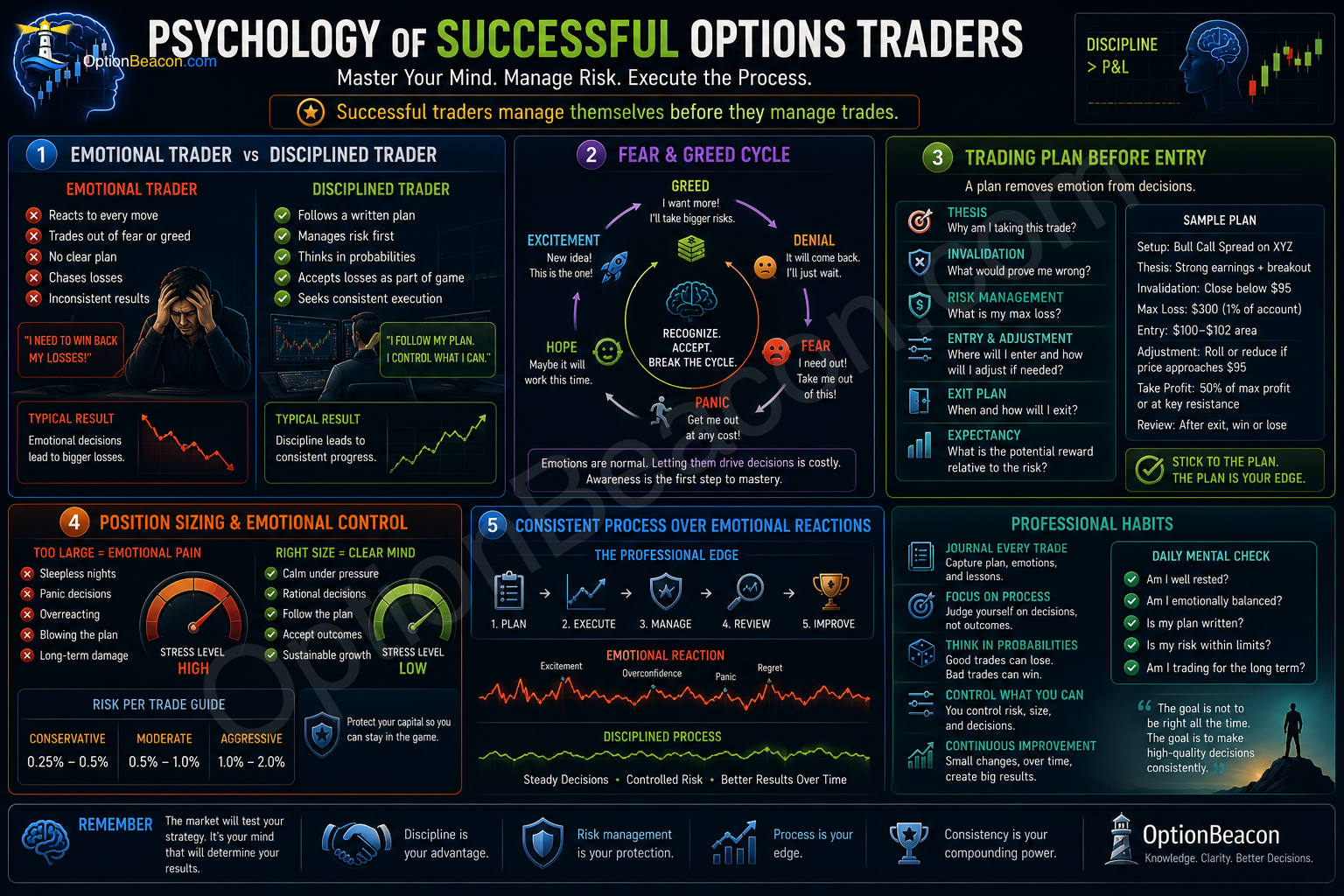
Options amplify emotions because:
- Leverage increases sensitivity.
- Losses may happen quickly.
- Positions can change rapidly.
- Uncertainty never fully disappears.
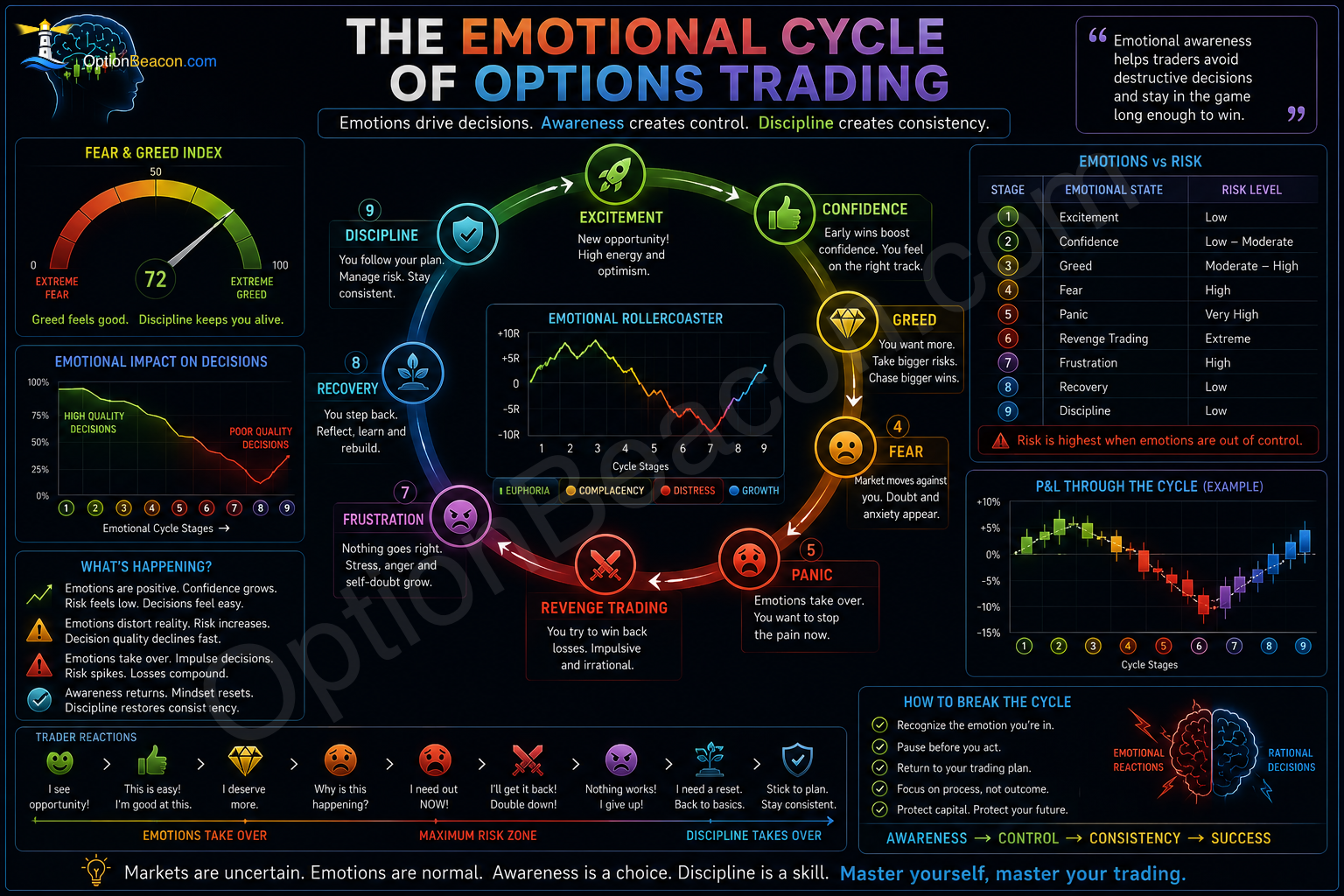
This often creates:
- Fear.
- Greed.
- Overconfidence.
- Hesitation.
- Revenge trading.
- Impulsive decisions.
Many losses happen not because:
- The strategy was terrible.
But because:
- The trader abandoned the plan emotionally.
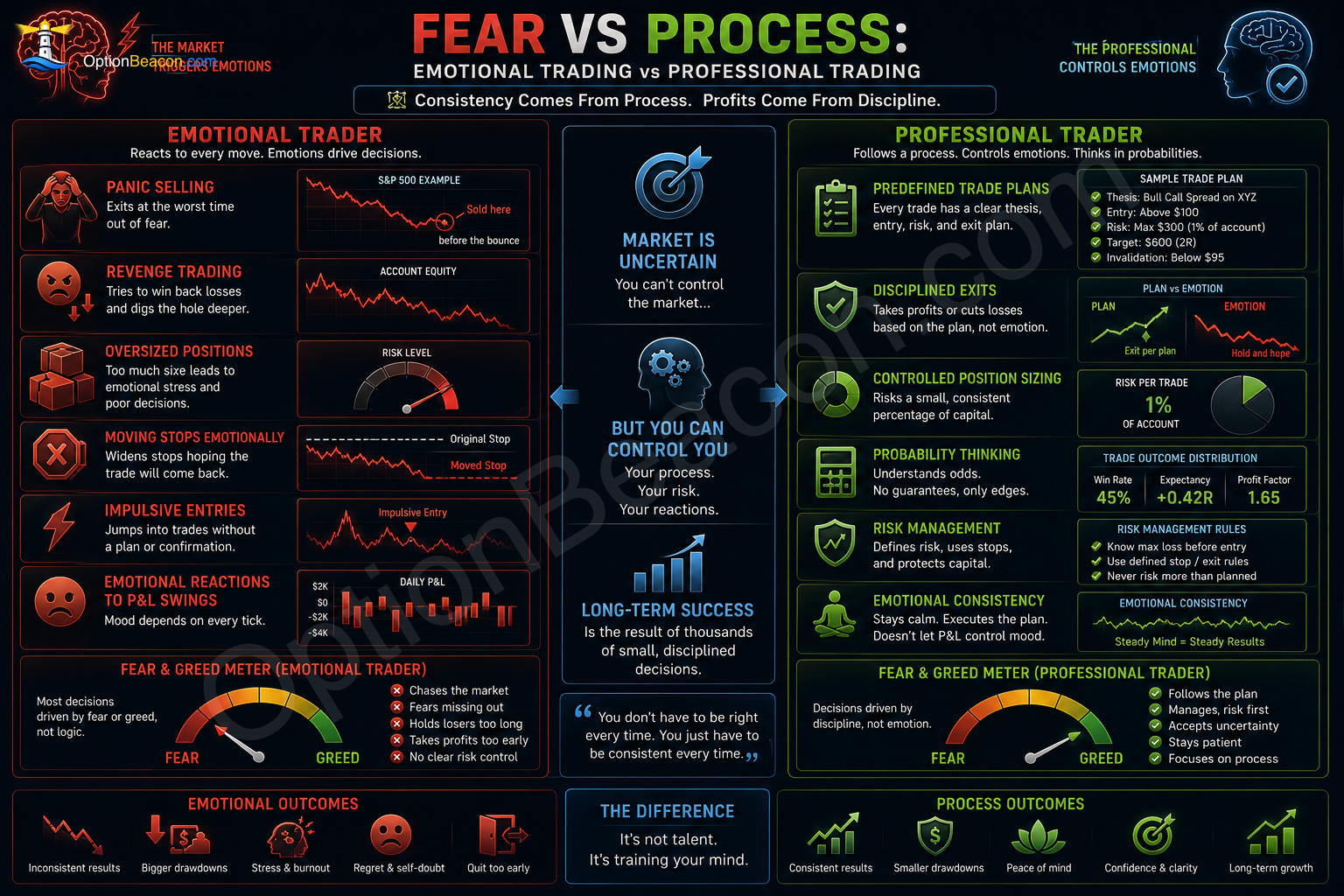
Professional traders understand:
- The market is uncertain by nature.
The goal is not:
- Always be right.
The goal is:
- Consistently make high-quality decisions under uncertainty.
How Successful Traders Think
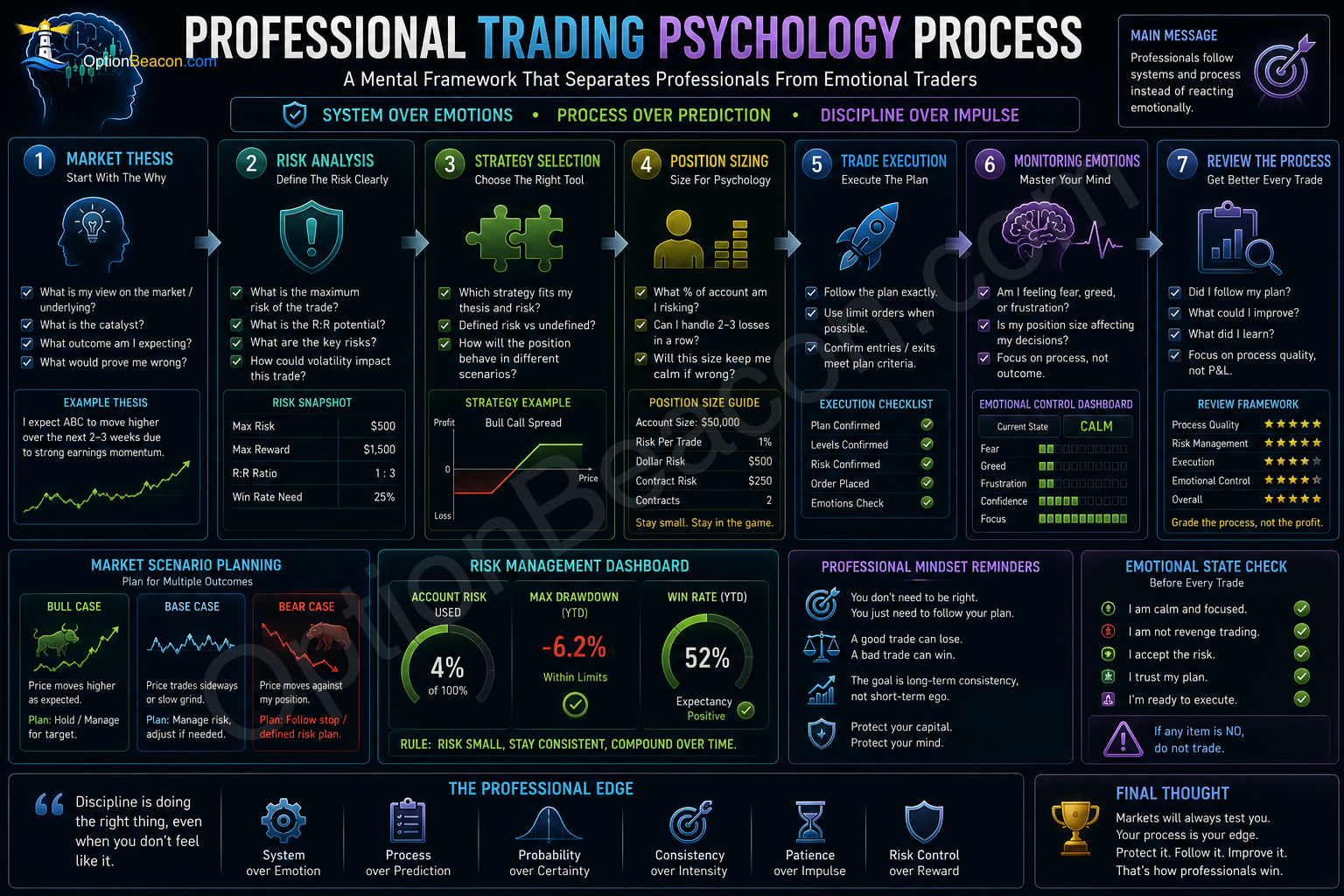
Step 1 — Plan the Trade Before Entry
Professional traders define:
- Entry.
- Thesis.
- Risk.
- Adjustment plan.
- Exit rules.
Before placing the trade.
They do not invent the plan:
- During stress.
- During volatility.
- During panic.
A professional trader should be able to answer:
- Why am I entering?
- What would prove me wrong?
- What is my maximum acceptable loss?
- What happens if volatility changes?
- What is my adjustment plan?
Step 2 — Accept That Losses Are Part of Trading
Professionals think in:
- Probabilities.
- Distributions.
- Long-term process quality.
They understand:
- Good trades can lose.
- Bad trades can win.
This mindset helps reduce:
- Emotional attachment.
- Overreaction.
- Revenge behavior.
Step 3 — Size Positions So Decisions Stay Rational
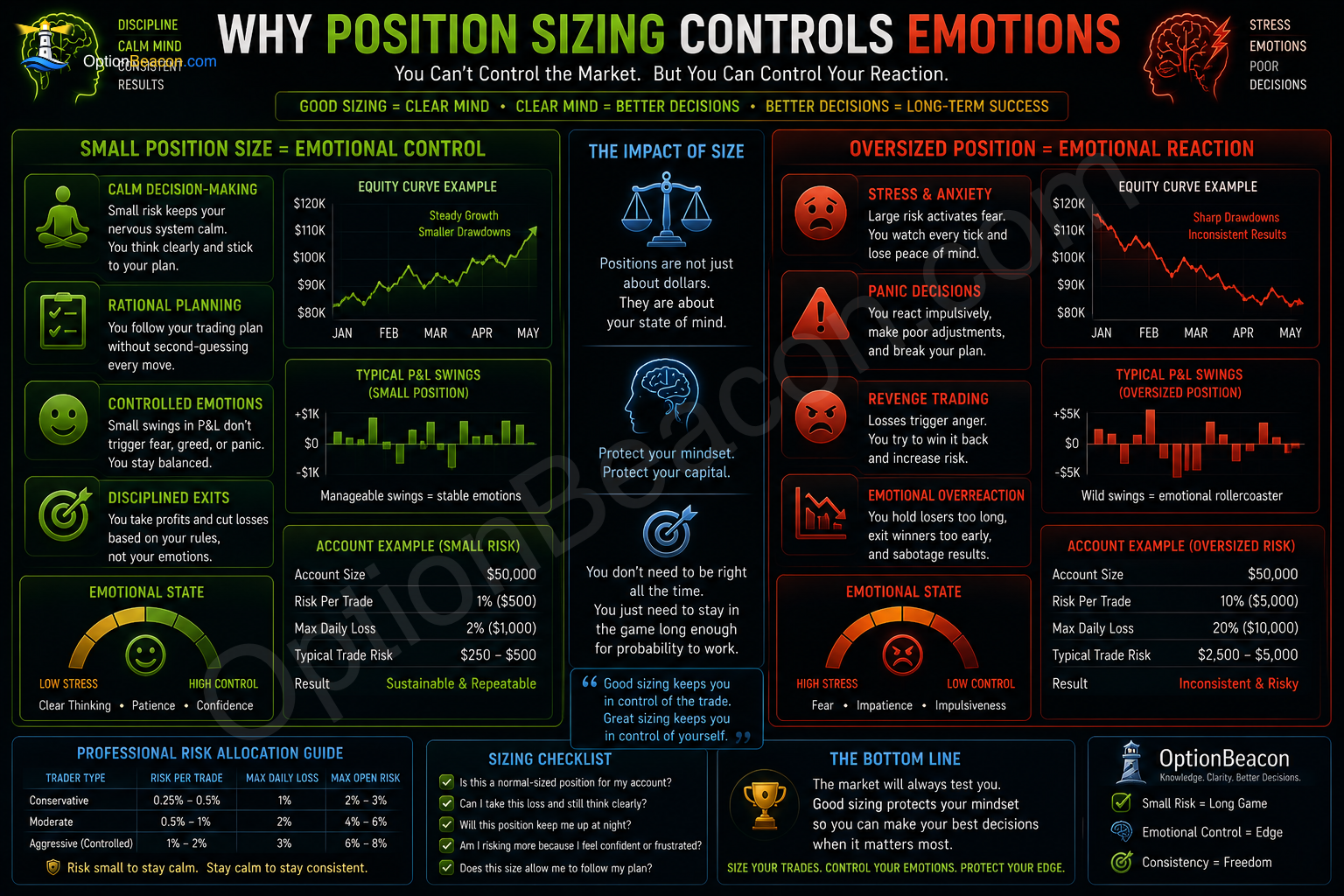
Position sizing is psychological.
Oversized trades often create:
- Panic.
- Emotional decision-making.
- Sleep disruption.
- Loss of discipline.
Smaller positions make it easier to:
- Follow the plan.
- Think clearly.
- Survive volatility.
Professional traders focus heavily on:
- Survivability.
- Consistency.
- Risk control.
Step 4 — Review Trades Honestly
Professionals review:
- Process quality.
- Risk management.
- Discipline.
- Execution quality.
They avoid:
- Rewriting the original thesis.
- Emotionally justifying losses.
- Blaming the market.
The important question is not:
- Did this trade win?
The better question is:
- Was the process repeatable and disciplined?
Real Example
A trader sells a credit spread before earnings.
The position moves against them quickly.
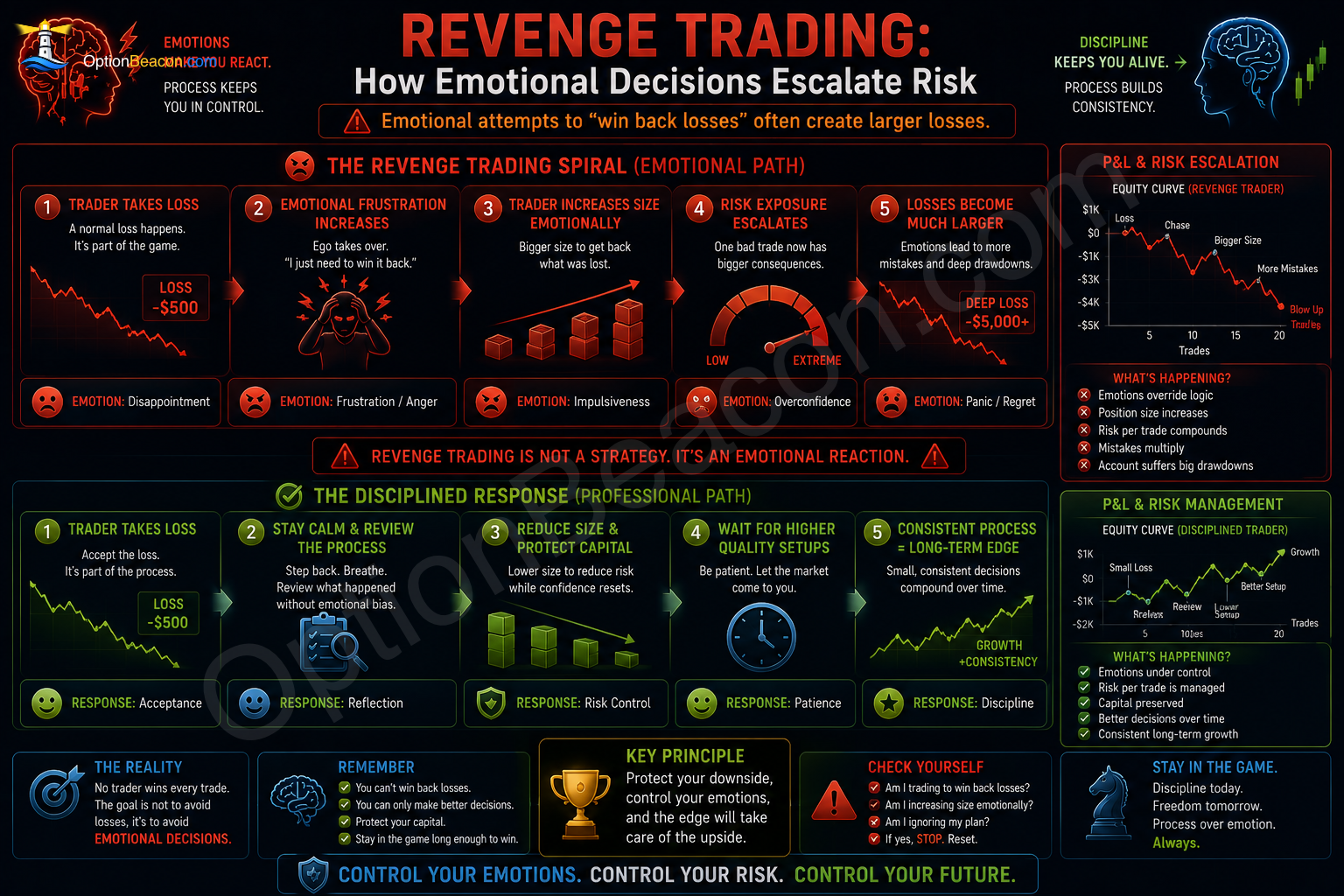
Without a plan:
- They panic.
- Double the position.
- Move stops emotionally.
- Increase risk.
With a structured process:
They already know:
- Max loss.
- Adjustment levels.
- Exit plan.
- Acceptable risk.
The emotional experience becomes more manageable because the decisions were already made before stress increased.
Examples are simplified so the mechanics are easier to see. Real trades also include commissions, fees, taxes, assignment risk, liquidity changes, implied volatility shifts, and execution quality.
Professional Trader Lens
Professional traders think in:
- Distributions.
- Probabilities.
- Long-term expectancy.
They understand:
- No single trade matters significantly.
- Uncertainty never disappears.
- Consistency matters more than prediction.
A professional process usually starts with:
1. Underlying thesis. 2. Volatility analysis. 3. Strategy selection. 4. Position sizing. 5. Risk management. 6. Post-trade review.
The option contract expresses the idea — not the idea itself.
Risks and Tradeoffs
Overconfidence After Wins
Winning streaks may encourage excessive risk-taking.
Revenge Trading After Losses
Emotional trading often increases after frustration.
Anchoring to the Original Premium or Strike
Traders sometimes refuse to reassess objectively.
Emotional Attachment to Trades
Attachment may interfere with disciplined exits.
Decision Fatigue
Too much screen time and emotional stress may reduce decision quality.
Risk should be reviewed:
- Before entry.
- During the trade.
- After conditions change.
Options positions evolve quickly because:
- Delta.
- Gamma.
- Theta.
- Vega.
Are dynamic.
A position that initially looked manageable may become emotionally difficult after:
- A rapid move.
- Increased volatility.
- Accelerated time decay.
Common Mistakes
Moving Stops Because the Trade Feels Unfair
Emotions should not redefine risk.
Increasing Size to Recover Losses
This often increases emotional instability.
Judging Process Only by Outcome
A good trade can lose.
A bad trade can win.
Trading Without a Written Plan
Undefined decisions often become emotional decisions.
Oversizing High-Volatility Trades
Large positions can override discipline.
Most beginner mistakes come from focusing on:
- Short-term P/L.
- Emotional conviction.
- Excitement.
Instead of:
- Probabilities.
- Process quality.
- Survivability.
Practical Checklist
Before entering a trade:
- Can you explain the strategy without looking at the order ticket?
- What is the maximum planned loss?
- What would prove the thesis wrong?
- Do you know the exit plan?
- Is position size small enough to stay rational?
- Have you checked liquidity and volatility?
- Are you emotionally calm before entry?
- Would you still take the trade if you lose?
Related Guides
Continue learning:
- Risks of Options Trading
- Advanced Risk Management for Options Traders
- Building a Full Options Trading Plan
- Options Expiration and Time Decay
- The Greeks: Delta, Gamma, Theta, and Vega
Key Takeaways
- Successful traders think in probabilities.
- Process matters more than emotional conviction.
- Losses are part of trading distributions.
- Position sizing strongly affects psychology.
- Emotional trading often increases risk.
- Discipline matters more than prediction.
- Professional traders follow repeatable systems.
- Survivability is critical for long-term success.
FAQ
What mindset helps successful options traders?
Probabilistic thinking, humility, discipline, and consistency.
How do I avoid emotional trades?
Define: - Thesis. - Max loss. - Exit rules. - Adjustment plans. Before entering the trade.
Why is position sizing psychological?
Smaller positions make it easier to: - Stay calm. - Think rationally. - Follow the plan under stress.
Why do professionals focus on process?
Because: - Individual trades are uncertain. - Disciplined decision-making can remain consistent over time. ## Educational Disclaimer OptionBeacon provides educational content only and does not provide financial, investment, or trading advice.