


Risk Management
Building a Full Options Trading Plan
Learn how to build a structured options trading plan with strategy rules, risk limits, position sizing, review habits, and emotional discipline checkpoints.
Overview
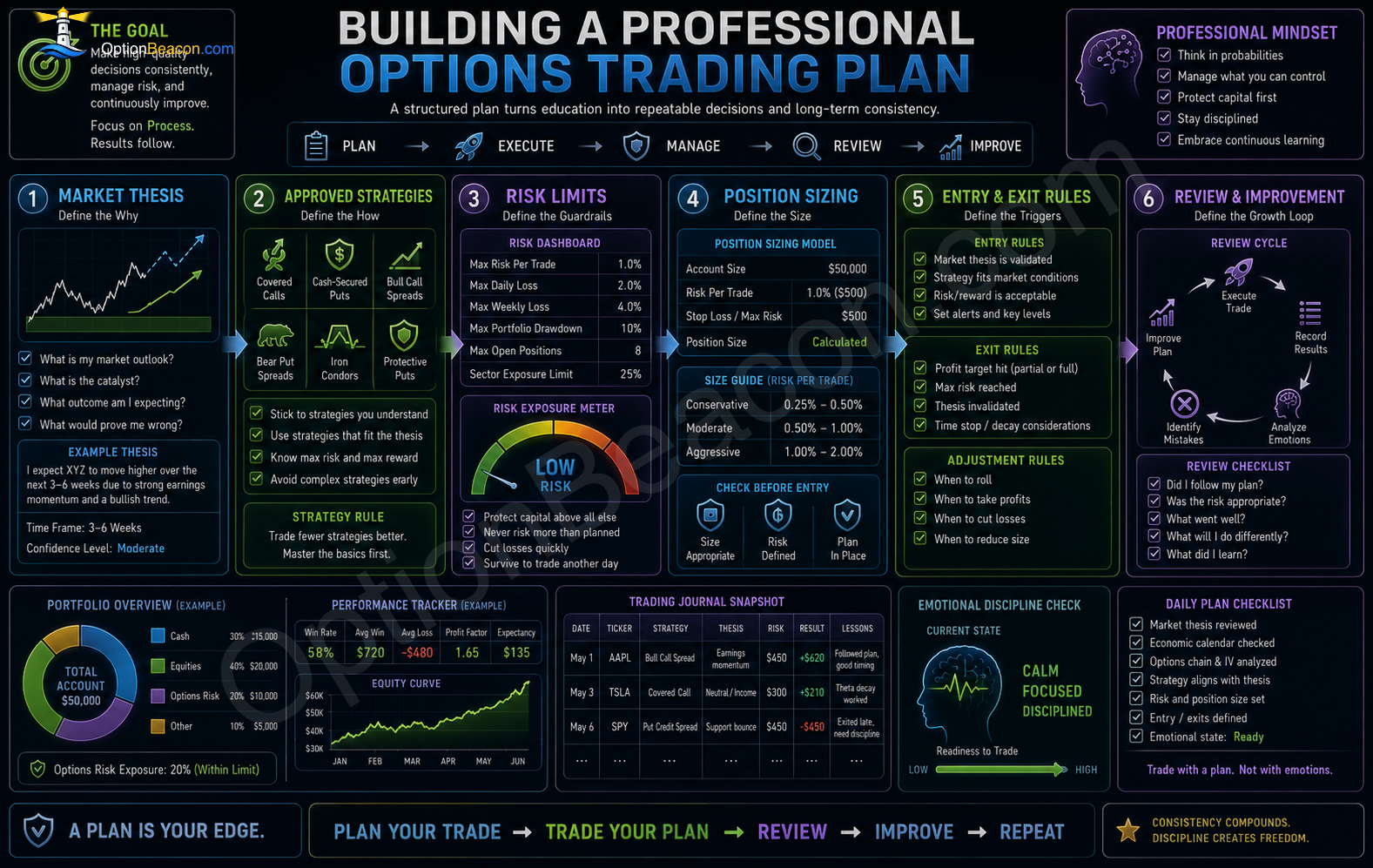
A trading plan turns options education into:
- A repeatable process.
- A structured decision framework.
- A risk management system.
Without a plan:
- Decisions often become emotional.
- Risk becomes inconsistent.
- Mistakes become difficult to evaluate objectively.
A strong options trading plan defines:
- What you trade.
- Why you trade it.
- How much you risk.
- How you size positions.
- When you enter.
- When you exit.
- How you review results afterward.
Professional traders understand something important:
- Consistency usually comes from process — not prediction.
A trading plan does not guarantee profits.
But it helps traders:
- Reduce emotional decisions.
- Identify mistakes faster.
- Improve discipline.
- Survive difficult market periods.
This guide explains how to build an options trading plan in practical terms. It is written for education, not as a trade recommendation. Before using any options strategy, understand assignment exposure, realistic loss scenarios, liquidity risk, implied volatility behavior, and how your emotional reactions may affect execution.
Why Trading Plans Matter
Markets are uncertain.
Even strong strategies experience:
- Losing streaks.
- Volatility shifts.
- Unexpected news.
- Emotional stress.
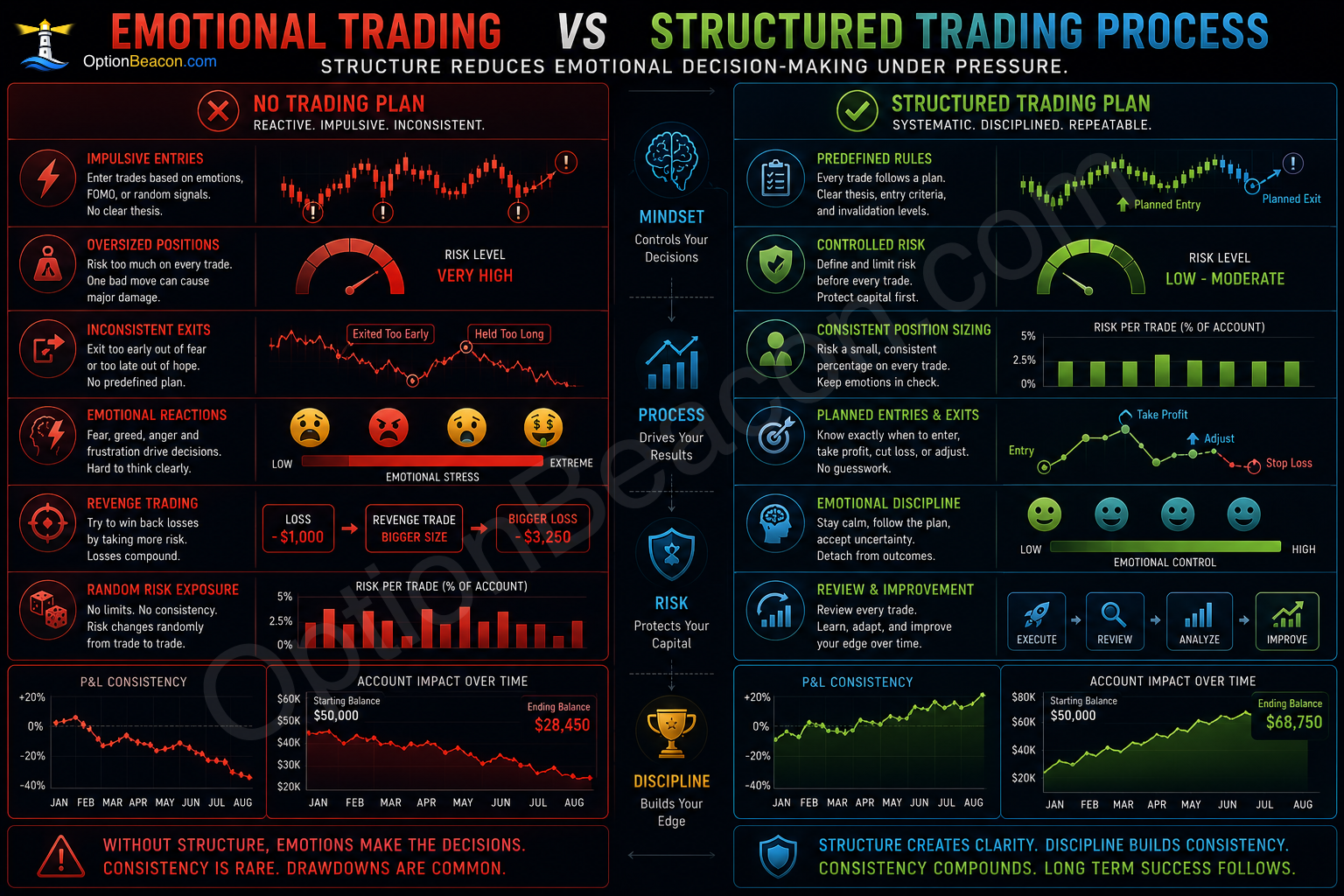
Without a plan:
- Traders often improvise.
- Chase losses.
- Oversize positions.
- Abandon discipline during volatility.
A trading plan creates:
- Structure.
- Repeatability.
- Accountability.
It helps separate:
- Emotional reactions.
From:
- Professional decision-making.
Professional traders rely heavily on:
- Predefined rules.
- Position sizing discipline.
- Repeatable workflows.
Step 1 — Define Your Trading Goals
A trading plan should begin with realistic goals.
Examples:
- Income generation.
- Long-term consistency.
- Education and skill development.
- Portfolio hedging.
- Controlled growth.
Professional goals usually focus more on:
- Process quality.
- Survivability.
- Consistency.
Than:
- Getting rich quickly.
A trader should define:
- Time horizon.
- Account size.
- Experience level.
- Acceptable risk tolerance.
Step 2 — Define Approved Strategies
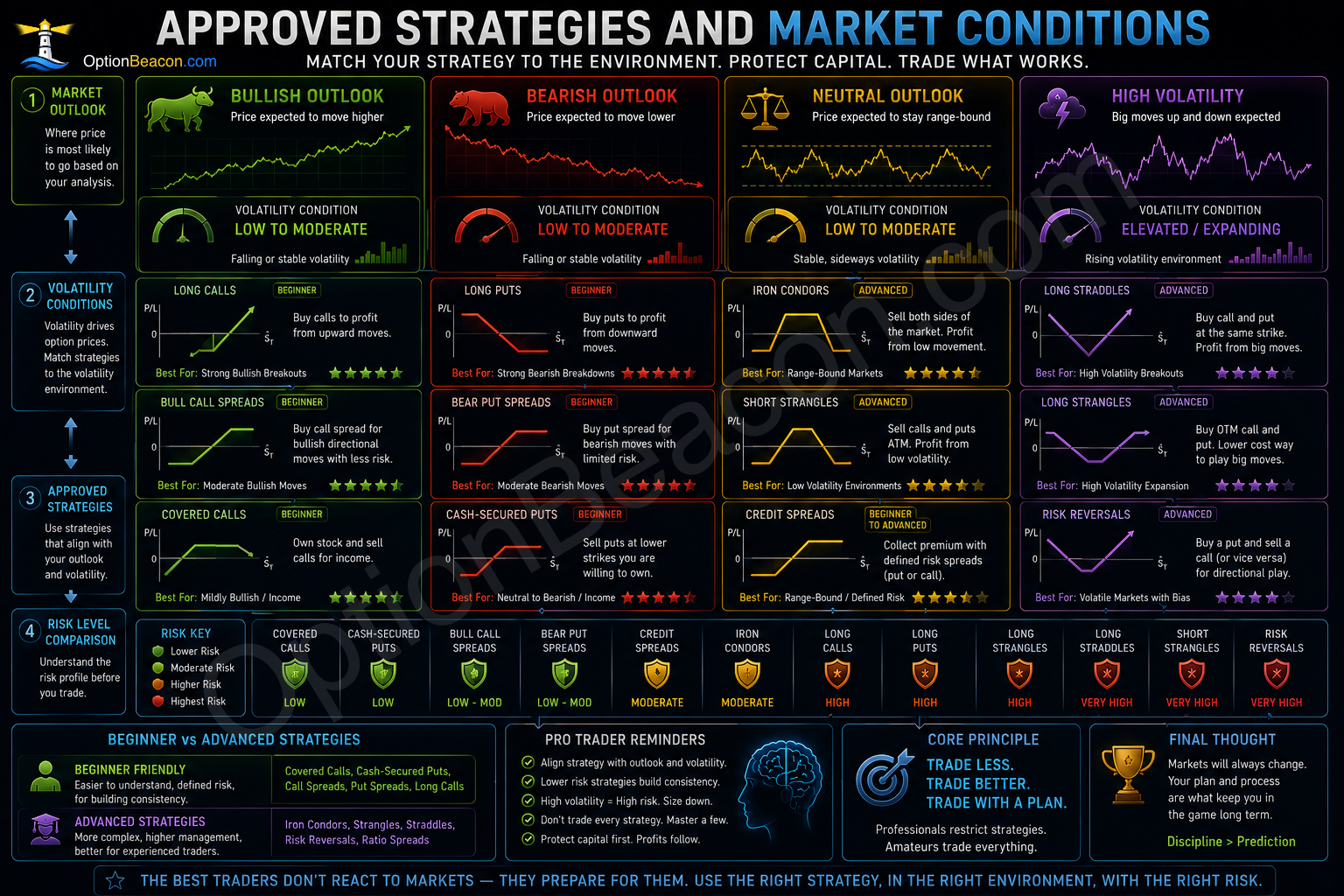
Most beginners should trade:
- Fewer strategies.
- Simpler structures.
- Clearly defined risk.
A beginner trading plan may allow:
- Covered calls.
- Cash-secured puts.
- Debit spreads.
- Small defined-risk credit spreads.
A professional plan defines:
- Which strategies are allowed.
- When they can be used.
- Under what market conditions.
This helps reduce:
- Impulsive experimentation.
- Emotional overtrading.
- Complexity overload.
Step 3 — Create Risk Management Rules
Risk management is usually more important than prediction accuracy.
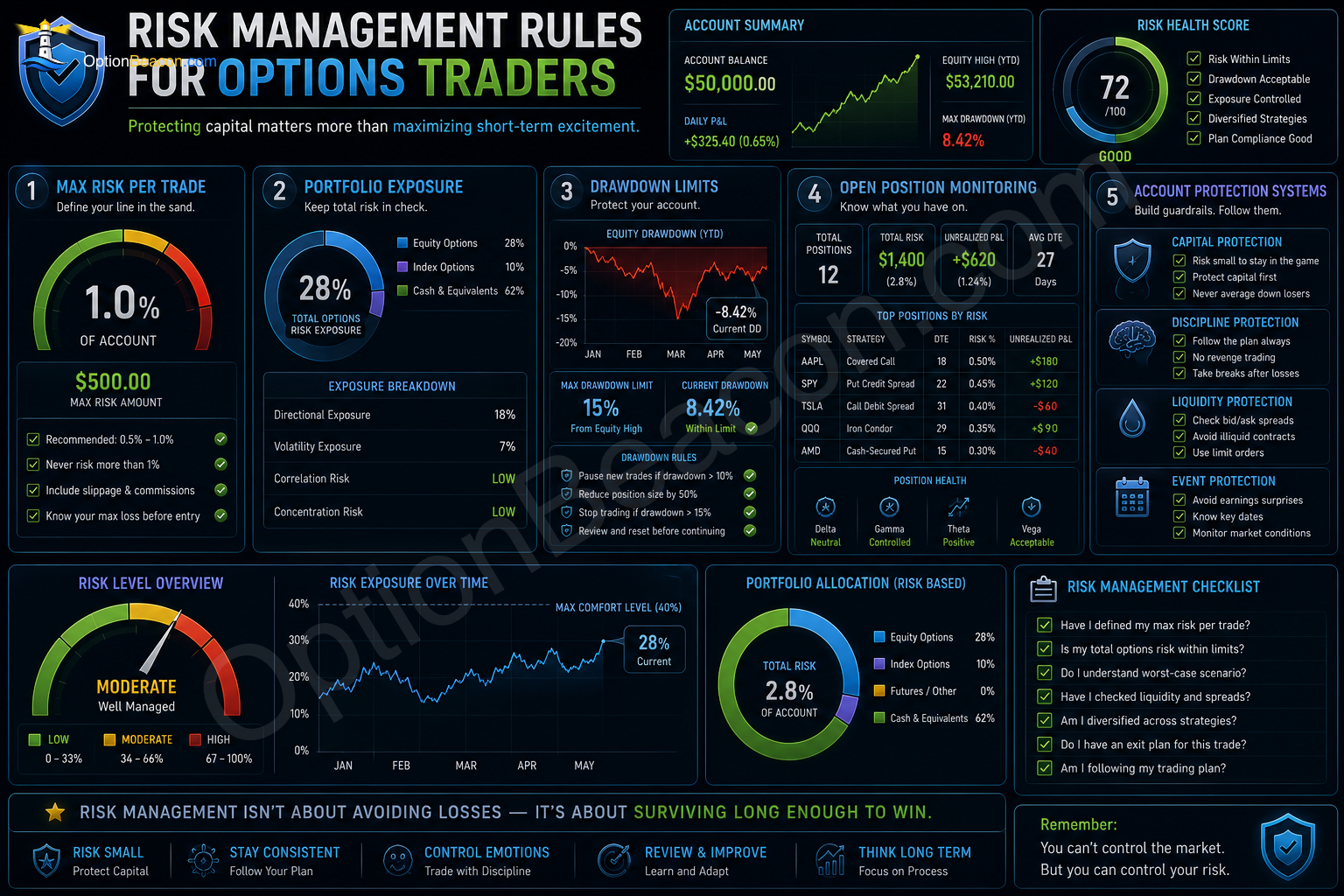
A strong trading plan defines:
- Maximum risk per trade.
- Daily loss limits.
- Weekly exposure limits.
- Portfolio concentration limits.
- Maximum open positions.
Professional traders focus heavily on:
- Staying in the game.
- Protecting capital.
- Surviving volatility.
Common beginner mistake:
- Risking too much on a single idea.
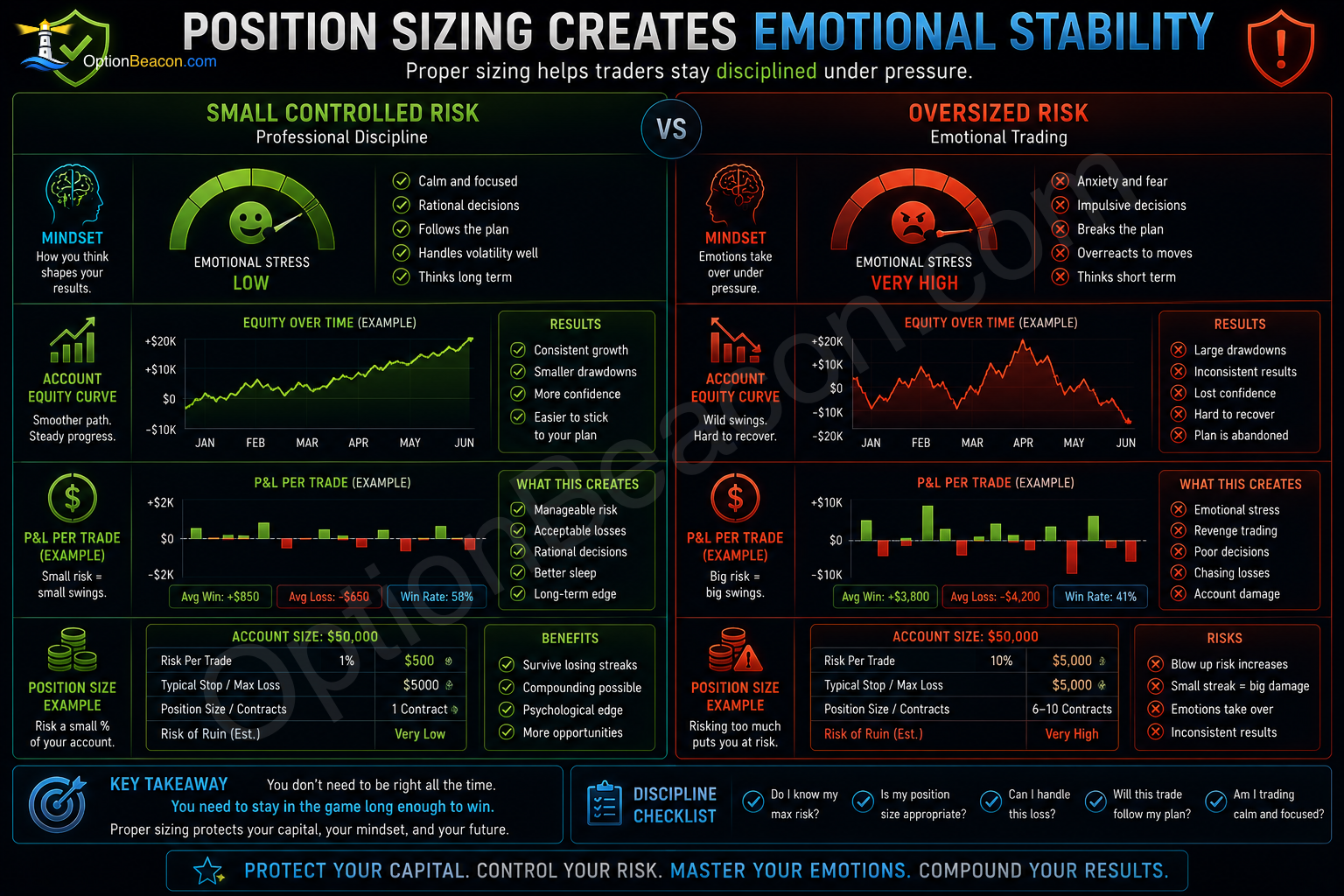
Step 4 — Define Position Sizing Rules
Position sizing strongly affects:
- Psychology.
- Survivability.
- Consistency.
Oversized trades often lead to:
- Panic.
- Revenge trading.
- Emotional exits.
- Broken discipline.
Smaller positions make it easier to:
- Think rationally.
- Follow the plan.
- Survive losing streaks.
Professional traders understand good sizing protects both:
- Capital.
- Emotional stability.
Step 5 — Define Entry, Exit, and Adjustment Rules
A trading plan should define:
- What confirms entry.
- What invalidates the thesis.
- When to take profits.
- When to reduce risk.
Professional traders avoid:
- Inventing decisions emotionally during stress.
A structured process reduces:
- Hesitation.
- Impulsive reactions.
- Inconsistent execution.
Examples of rules:
- Avoid trading during earnings.
- No new positions before major economic reports.
- Take profits at predefined targets.
- Reduce exposure after consecutive losses.
Real Example
A beginner options trading plan might:
- Allow only covered calls, cash-secured puts, and small defined-risk spreads.
- Cap risk per trade at 1%.
- Avoid earnings trades.
- Require a written thesis before entry.
The trader may also:
- Limit total open positions.
- Review trades weekly.
- Pause trading after multiple emotional mistakes.
Examples are simplified so the mechanics are easier to see. Real trading also includes commissions, taxes, assignment exposure, implied volatility changes, liquidity shifts, and execution quality.
Professional Trader Lens
Professionals use:
- Systems.
- Checklists.
- Predefined rules.
To reduce:
- Decision fatigue.
- Emotional reactions.
- Inconsistency.
The goal of a trading plan is not:
- Perfect predictions.
The goal is:
- Repeatable decision quality.
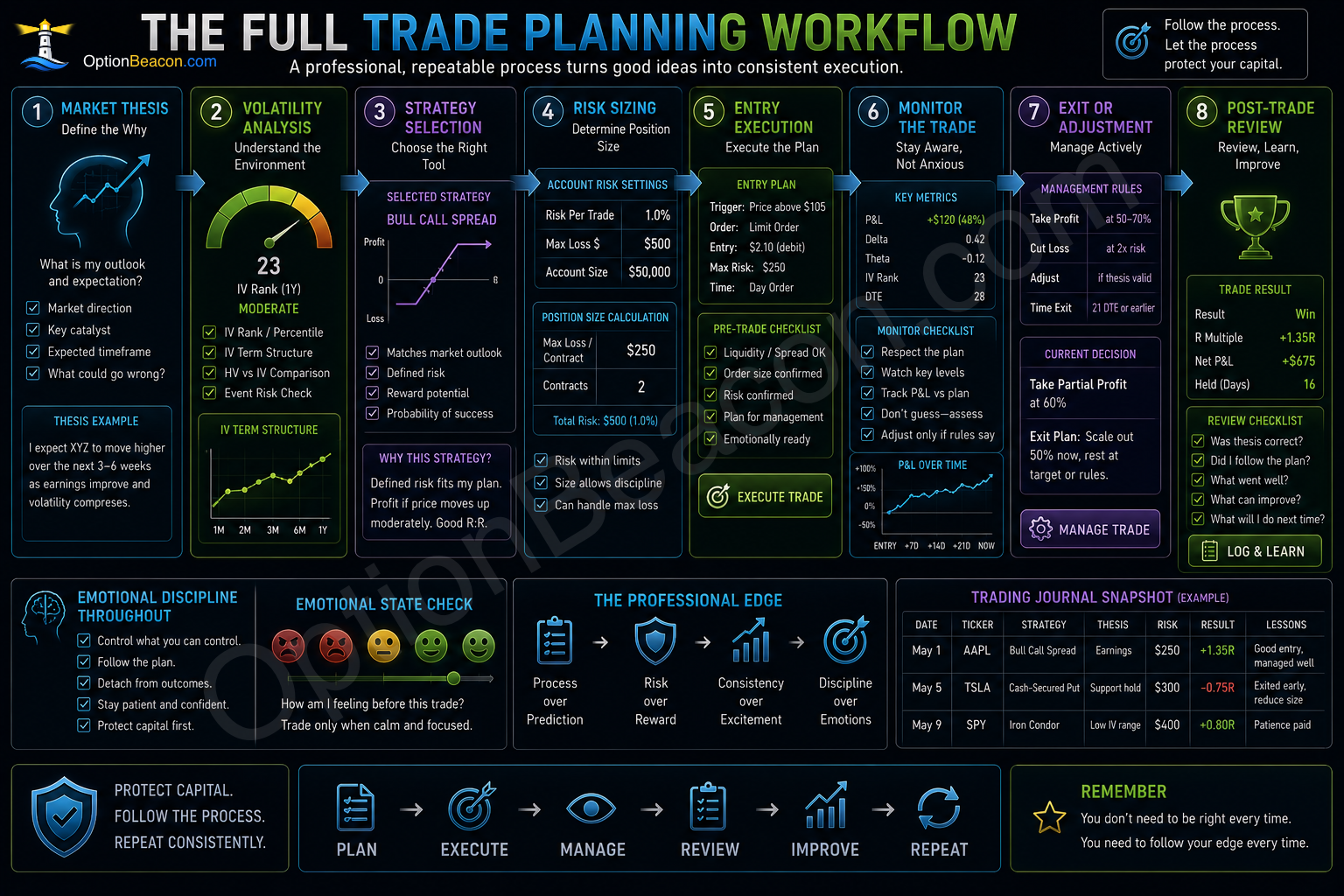
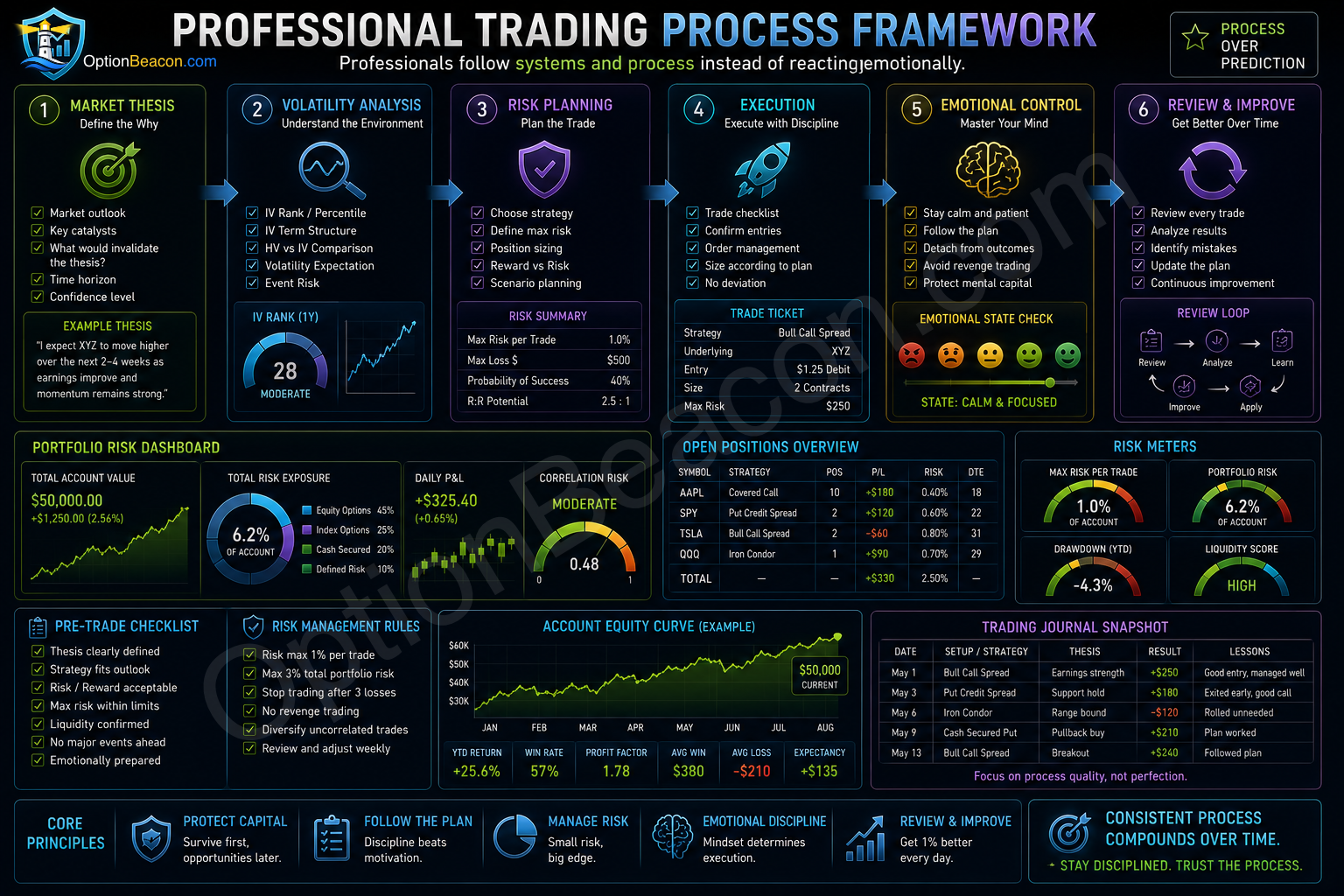
A professional process usually starts with:
1. Underlying thesis. 2. Volatility analysis. 3. Strategy selection. 4. Position sizing. 5. Risk management. 6. Review and adaptation.
The option contract expresses the idea — not the idea itself.
Risks and Tradeoffs
A Vague Plan Will Fail Under Stress
Undefined rules often become emotional decisions.
Overly Complex Plans May Be Ignored
Simple, repeatable systems are easier to follow consistently.
No Plan Removes Market Risk
Losses and uncertainty are always part of trading.
Markets Change
A plan should evolve as:
- Experience grows.
- Market conditions change.
- Weaknesses become visible.
Risk should be reviewed:
- Before entry.
- During the trade.
- After conditions change.
Options positions evolve quickly because:
- Delta.
- Gamma.
- Theta.
- Vega.
Are dynamic.
Common Mistakes
Writing Goals Without Risk Limits
Goals without protection often create inconsistent behavior.
Changing Rules After Every Loss
Emotionally rewriting the system destroys consistency.
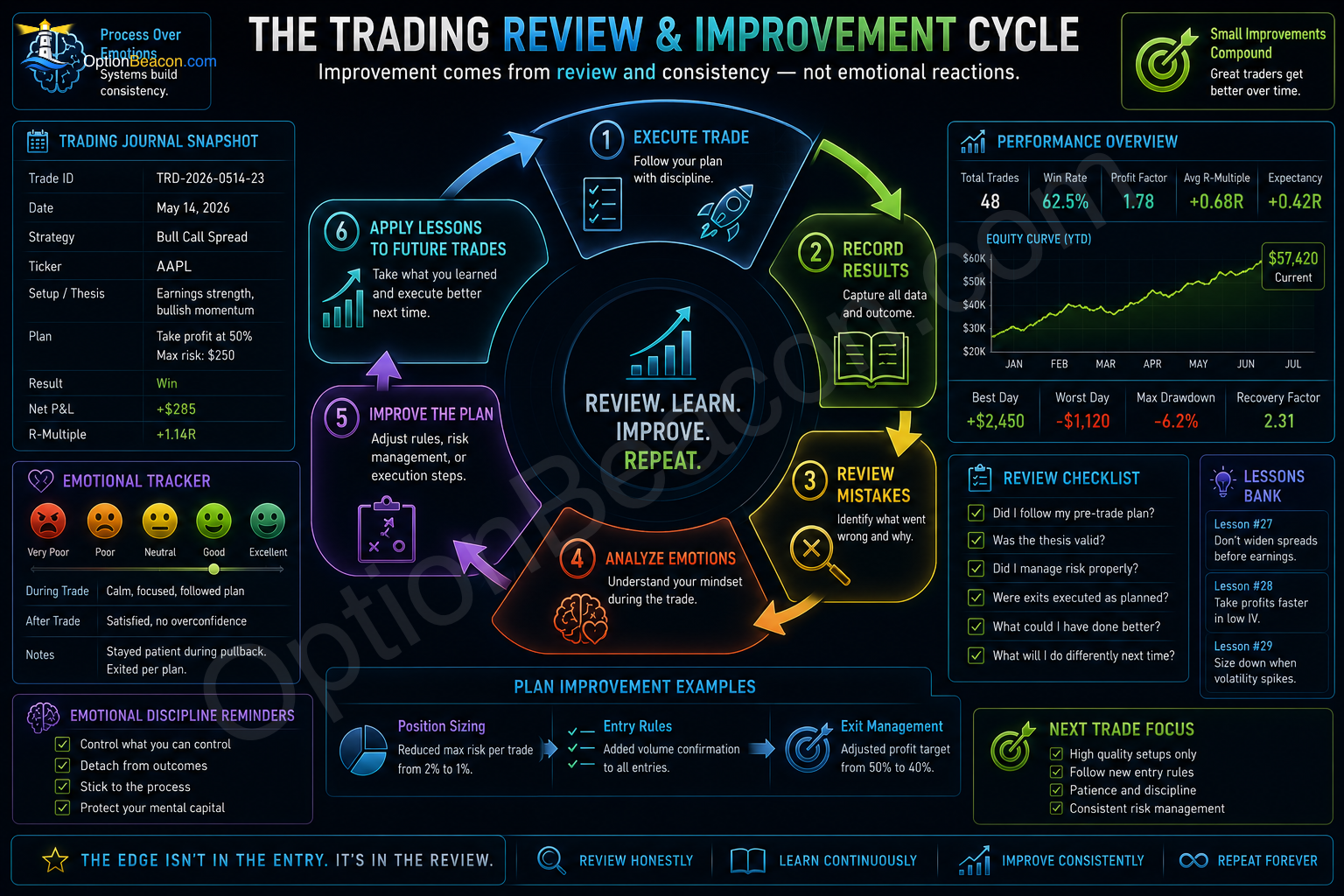
Skipping Post-Trade Review
Without review:
- Mistakes repeat.
Trading Too Many Strategies Too Early
Complexity often creates confusion.
Ignoring Emotional Discipline
Even strong strategies fail under emotional execution.
Most beginner mistakes come from focusing on:
- Premium opportunity.
- Excitement.
- Short-term outcomes.
Instead of:
- Survivability.
- Discipline.
- Repeatable process quality.
Practical Checklist
Before entering a trade:
- Can you explain the strategy without looking at the order ticket?
- What is the maximum planned loss?
- What invalidates the thesis?
- Is the position size appropriate?
- Do you understand assignment exposure?
- Have you checked liquidity and volatility?
- Is the strategy approved in your plan?
- Do you know the exit and adjustment rules?
- Are you emotionally calm before entry?
Related Guides
Continue learning:
- Risks of Options Trading
- Psychology of Successful Options Traders
- Advanced Risk Management for Options Traders
- How to Choose the Right Strike Price
- Options Expiration and Time Decay
Key Takeaways
- Trading plans create structure and consistency.
- Risk management matters more than prediction.
- Position sizing affects psychology and survivability.
- Approved strategy lists reduce emotional overtrading.
- Process helps reduce decision fatigue.
- Review systems help identify mistakes faster.
- Emotional discipline matters as much as strategy selection.
- Professional traders rely heavily on repeatable workflows.
FAQ
What should be included in an options trading plan?
A strong plan usually includes: - Approved strategies. - Risk limits. - Position sizing rules. - Entry and exit criteria. - Adjustment rules. - Review systems.
How often should I review the plan?
Review after: - Meaningful samples of trades. - Major mistakes. - Significant market condition changes.
Should beginners trade every strategy?
No. Beginners should usually: - Simplify. - Restrict strategy selection. - Master core mechanics first.
Why are written rules important?
Because emotions become stronger during stress. Written rules reduce: - Impulsive decisions. - Inconsistent execution. - Emotional trading. ## Educational Disclaimer OptionBeacon provides educational content only and does not provide financial, investment, or trading advice.